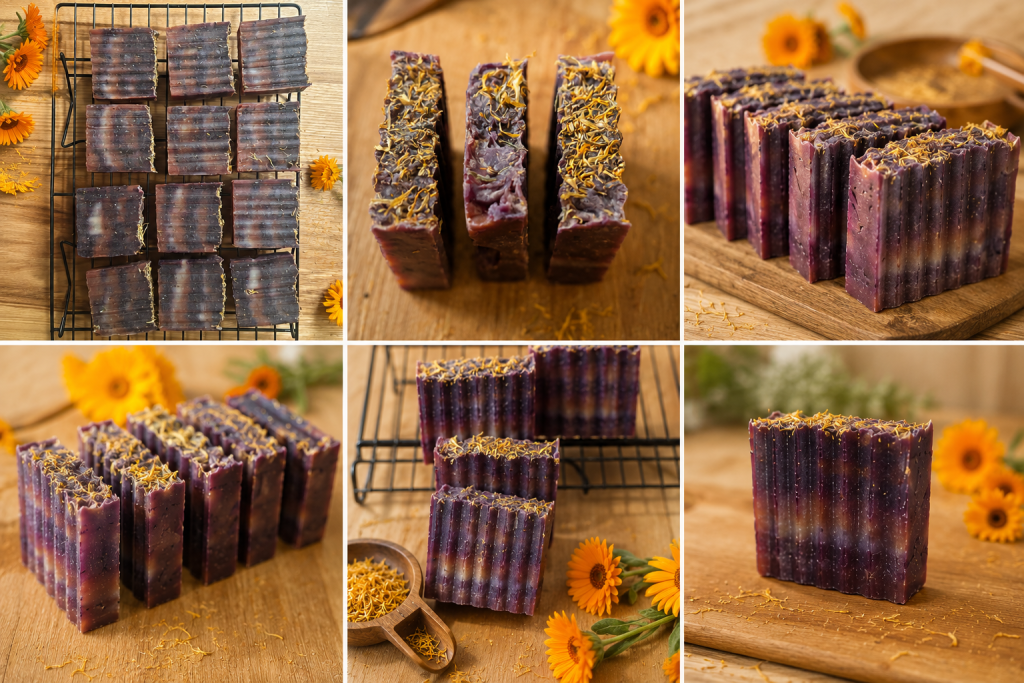
Calendula Lavender Cold Process Soap
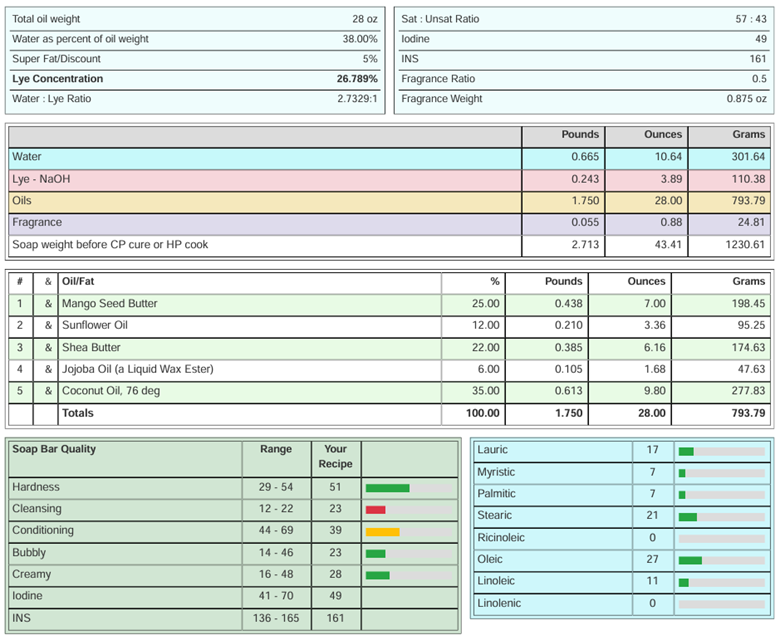
To calculate proper ratios I utilize the free online soap and lye calculator. Free Soap & Lye Calculator — Calculate Your Soap Recipe | SoapCalc
Ingredients used to achieve this bar of soap:
- Coconut Oil
- Mango Seed Butter
- Shea Butter
- Sunflower Oil
- Jojoba Oil
- Lavender DoTerra Essential Oil
- Dried Calendula flowers for it’s soothing properties
- Crushed chia seeds for exfoliation
- Lye
Cold Process Method
A digital kitchen scale is an absolute must for soap making. I never realized how often I’d use one until I started making soap—now it’s a staple in my kitchen that I use almost daily.
Start by using your scale to weigh your liquid into a heatproof container and set it aside. In a separate container, carefully weigh out your lye.
Slowly pour the lye into the liquid. Always add lye to liquid—never the other way around—to avoid a dangerous reaction. Stir gently until the lye is fully dissolved. The mixture will become very hot, so avoid breathing in the fumes. I usually mix mine in the sink with a window open or outdoors. Allow the mixture to cool to about 100–110°F.
Using the ratios provided by the linked soap calculator above, weigh out your oils with your digital kitchen scale. Melt the oils together until they reach 90–100°F. A kitchen thermometer is another must-have tool—I actually use a simple meat thermometer!
Once both your lye mixture and oils have reached the proper temperature, it’s time to combine them. Use an immersion blender to mix the soap batter, alternating with hand stirring to avoid overheating the blender.
Continue mixing until the batter reaches “trace.” You’ll know you’ve reached trace when a drizzle of soap batter leaves a faint imprint on the surface before slowly fading away.
Now it’s time to add any fragrances, colorants, or herbs before pouring the mixture into your soap mold. Keep in mind that the soap is still caustic at this stage, so wear gloves and handle it carefully—I learned that lesson the hard way.
Insulate the mold by wrapping it in a towel to help retain heat. Let the soap sit in the mold for 24–48 hours.
Finally, remove the soap from the mold, cut it into bars, and allow it to cure for at least 4 weeks before use.
All linked items were necessities I personally purchased in 2024 when I first started experimenting with soap making (although I do have a different scale—the one linked is much nicer). These are the tools and supplies I still use today, and they made the process much easier to learn as a beginner.
As an Amazon Associate, I earn commission from qualifying purchases made through the links provided
Soap Calculator Measurements Used: